

The financial technology industry is evolving rapidly, and APIs are becoming the driving force behind seamless digital experiences. From payment gateways and digital wallets to lending systems and KYC verification, APIs enable fintech platforms to connect, automate, and scale efficiently. Businesses focusing on Digital Lending Compliance: FinTech APIs are now building smarter ecosystems that improve customer experiences while maintaining security and regulatory standards.
Modern fintech companies no longer operate as isolated systems. Instead, they rely on interconnected services powered by APIs to deliver real-time financial operations. Whether it is loan processing, identity verification, credit scoring, or automated repayment systems, APIs simplify complex workflows and help organizations innovate faster.
As financial regulations become stricter and customer expectations continue to rise, API-driven infrastructure is becoming essential for every fintech business planning long-term growth.
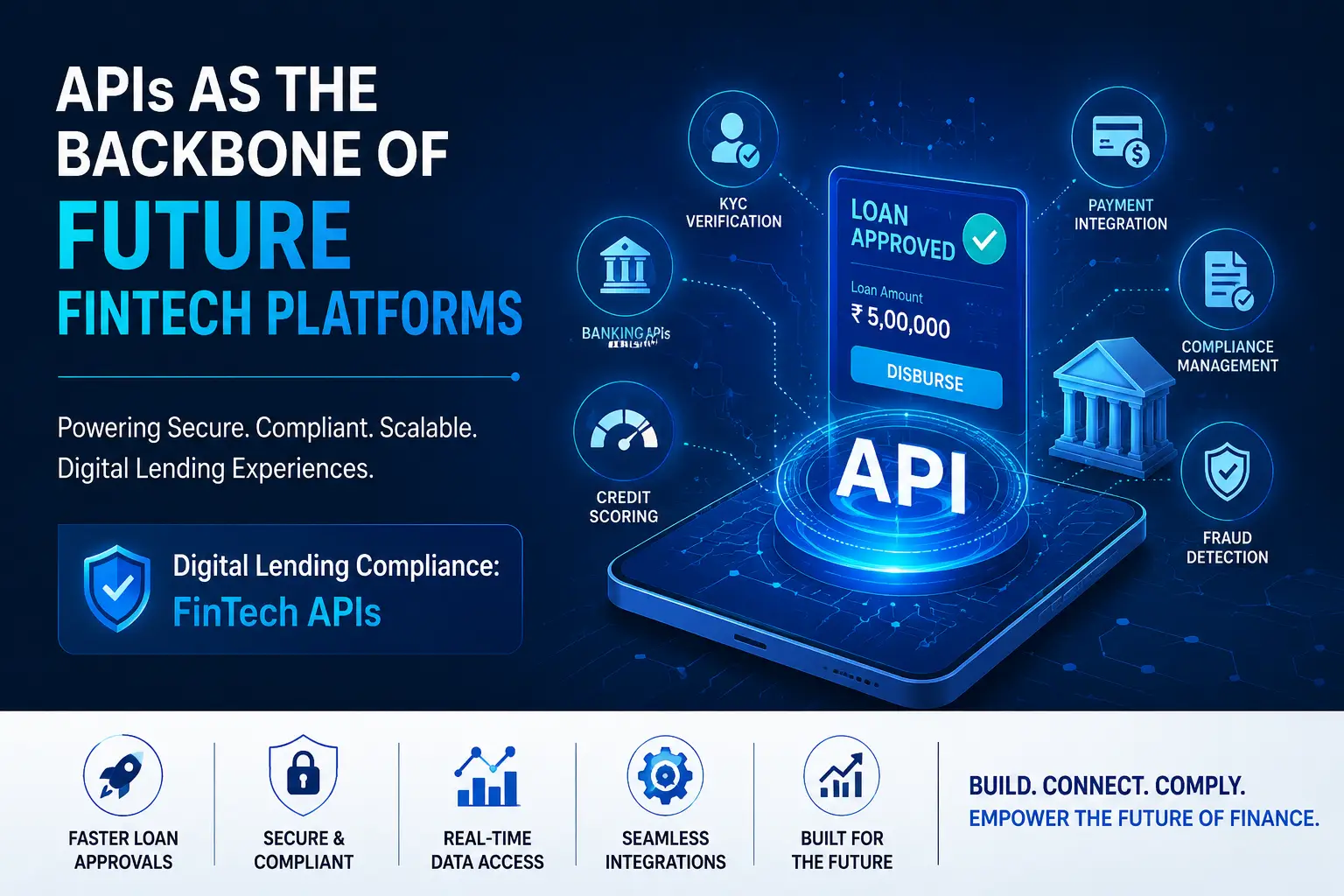
Understanding the Role of APIs in FinTech
Application Programming Interfaces (APIs) allow different software systems to communicate with each other securely and efficiently. In the fintech sector, APIs act as digital bridges between banks, NBFCs, payment systems, lending platforms, CRMs, and third-party financial services.
For example, a digital lending platform may use APIs for:
- Customer onboarding
- eKYC verification
- Bank statement analysis
- Credit bureau checks
- EMI management
- Payment collection
- Fraud detection
- Account aggregation
By integrating these services through APIs, fintech companies can reduce manual processes and deliver faster financial services.
The increasing importance of Digital Lending Compliance: FinTech APIs is also helping organizations stay aligned with regulatory frameworks while improving operational transparency.
Why APIs Are Essential for Modern FinTech Platforms
Traditional banking systems were often slow, rigid, and dependent on legacy infrastructure. APIs have changed this by enabling agile and modular fintech ecosystems.
Faster Innovation
APIs allow developers to integrate advanced financial features without building everything from scratch. This reduces development time and accelerates product launches.
Enhanced Customer Experience
Customers expect quick approvals, instant payments, and smooth onboarding. APIs enable real-time processing and seamless user journeys.
Scalability
As fintech platforms grow, APIs help them expand services easily by integrating new technologies and third-party providers.
Improved Security
Modern APIs include encryption, authentication protocols, and secure tokenization methods that protect sensitive financial information.
Regulatory Compliance
Financial institutions must comply with multiple regulations. API-based compliance systems help automate reporting, KYC validation, transaction monitoring, and audit trails.
"APIs are no longer just technical connectors — they are the foundation powering secure, scalable, and intelligent fintech ecosystems for the future."
Digital Lending Compliance: FinTech APIs and Regulatory Transformation
The lending ecosystem is experiencing major regulatory changes worldwide. Governments and financial authorities are focusing heavily on transparency, borrower protection, and secure data handling.
This is where Digital Lending Compliance: FinTech APIs play a critical role.
APIs help digital lenders automate compliance-related processes such as:
- Identity verification
- Consent management
- Creditworthiness checks
- Document authentication
- Secure data sharing
- EMI mandate management
- Real-time transaction monitoring
Through automated compliance systems, lenders can minimize risks, reduce fraud, and maintain accurate reporting standards.
Additionally, API-driven compliance frameworks help fintech companies adapt quickly whenever regulatory requirements evolve.
Key Types of APIs Used in FinTech Platforms
Payment APIs
Payment APIs enable secure online transactions, UPI integrations, wallets, and payment gateway processing.
Examples include:
- UPI payment APIs
- Card processing APIs
- Subscription billing APIs
Banking APIs
Open banking APIs allow fintech applications to access banking data securely with customer consent.
These APIs support:
- Account aggregation
- Balance checks
- Transaction history
- Fund transfers
Lending APIs
Lending APIs simplify digital loan management by automating:
- Loan origination
- Eligibility checks
- Credit scoring
- EMI tracking
- Repayment scheduling
KYC and Verification APIs
KYC APIs help fintech platforms verify customer identities digitally using:
- Aadhaar verification .
- PAN validation
- Face matching
- OCR document scanning
Fraud Detection APIs
These APIs analyze user behavior and transaction patterns to identify suspicious activities in real time.
Benefits of Digital Lending Compliance: FinTech APIs
1. Faster Loan Approvals
API integrations automate document verification and credit analysis, significantly reducing loan processing time.
2. Better Customer Trust
Secure and compliant digital systems build confidence among borrowers and financial institutions.
3. Reduced Operational Costs
Automation minimizes manual verification processes and lowers administrative expenses.
4. Real-Time Data Access
APIs provide instant access to financial data, enabling quicker decision-making.
5. Seamless Third-Party Integration
Fintech businesses can easily integrate payment systems, CRMs, analytics tools, and compliance solutions.
6. Enhanced Data Accuracy
Automated workflows reduce human errors and improve reporting reliability.
7. Future-Ready Infrastructure
API-first fintech systems are more adaptable to emerging technologies and regulatory updates.
How Digital Lending Compliance: FinTech APIs Work
Understanding the workflow behind API-powered fintech platforms helps businesses recognize their value.
Step 1: Customer Onboarding
A customer enters personal and financial information into the lending platform.
Step 2: API-Based KYC Verification
The system uses KYC APIs to verify:
- Identity documents
- PAN details
- Aadhaar information
- Mobile authentication
Step 3: Credit Evaluation
EMI schedules are generated and stored within the system.
Step 4: Compliance Validation
Compliance APIs check whether the application meets regulatory standards and internal lending policies.
Step 5: Loan Approval and Disbursement
Once approved, payment APIs initiate fund transfers securely.
Step 6: EMI Monitoring and Collections
API-based systems automate reminders, mandate management, and repayment tracking.
This streamlined process helps fintech platforms deliver secure and scalable lending services.
The Future of API-Driven FinTech Ecosystems
The future of fintech depends heavily on connected digital ecosystems. APIs are enabling businesses to move toward embedded finance, decentralized banking, and AI-powered financial services.
Some upcoming trends include:
Open Finance Expansion
Financial data sharing will become more standardized and secure through open API ecosystems.
AI and Machine Learning Integration
APIs will increasingly support intelligent fraud detection, predictive lending, and automated underwriting.
Embedded Financial Services
Non-financial businesses will integrate fintech capabilities directly into their platforms using APIs.
Real-Time Compliance Monitoring
Advanced compliance APIs will continuously monitor transactions and flag regulatory risks instantly.
Hyper-Personalized Financial Products
API-driven data analysis will allow fintech companies to deliver customized lending and payment experiences.
Businesses investing in Digital Lending Compliance: FinTech APIs will be better positioned to adapt to these innovations.
Security Challenges and Best Practices
While APIs offer major advantages, fintech businesses must also focus on cybersecurity and compliance.
Common API Security Risks
- Unauthorized access
- Data breaches
- API abuse attacks
- Credential theft
- Weak authentication systems
Best Practices for Secure API Infrastructure
Use Strong Authentication
Implement OAuth 2.0, JWT tokens, and multi-factor authentication.
Encrypt Sensitive Data
Ensure all financial data is encrypted during transmission and storage.
Monitor API Traffic
Continuous monitoring helps identify unusual activity and potential threats.
Conduct Regular Audits
Security testing and compliance audits help maintain platform integrity.
Implement Access Controls
Limit API access based on user roles and permissions.
Strong API governance is essential for maintaining trust in digital financial ecosystems.
Why Businesses Should Invest in API-First FinTech Solutions
Fintech companies that adopt API-first architectures gain significant competitive advantages.
Faster Market Expansion
APIs make it easier to launch services across multiple regions and platforms.
Improved Partner Collaboration
Businesses can collaborate efficiently with banks, NBFCs, payment providers, and fintech partners.
Better Operational Efficiency
Automation improves workflow management and reduces delays.
Regulatory Readiness
API-driven compliance systems simplify adaptation to evolving financial regulations.
Enhanced Innovation
Companies can experiment with new services quickly without rebuilding their entire infrastructure.
As fintech competition increases, API-based ecosystems are becoming a necessity rather than an option.
FAQ
What are FinTech APIs?
FinTech APIs are software interfaces that allow financial applications to connect and exchange data securely with banks, payment gateways, lenders, and third-party systems.
Why are APIs important in digital lending?
APIs automate loan processing, KYC verification, payment collection, and compliance checks, improving speed and efficiency.
How do APIs improve fintech compliance?
APIs help automate regulatory workflows such as identity verification, transaction monitoring, consent management, and audit reporting.
Are FinTech APIs secure?
Yes, when implemented correctly using encryption, authentication protocols, and secure access controls, APIs provide strong security for financial systems.
What is the future of API-driven fintech?
The future includes embedded finance, AI-powered lending, open banking, and real-time compliance monitoring powered by API ecosystems.
Conclusion
APIs are transforming the fintech industry by enabling faster innovation, secure integrations, and scalable financial services. From digital payments to lending automation and compliance management, APIs have become the foundation of modern financial ecosystems.
Businesses focusing on Digital Lending Compliance: FinTech APIs can streamline operations, improve customer experiences, and stay aligned with evolving regulations. As the fintech landscape continues to grow, API-first strategies will define the next generation of digital financial platforms.
If your business is looking to build secure, scalable, and future-ready fintech solutions, Transparent Solutions can help you implement advanced API-driven technologies tailored to your operational needs.
Contact Transparent Solutions
Ready to modernize your fintech platform with secure API integrations and compliance-focused solutions?
Visit Transparent Solutions to explore our fintech technology services and connect with our experts.
Leave a Comment